 Burbank Appliance Repair
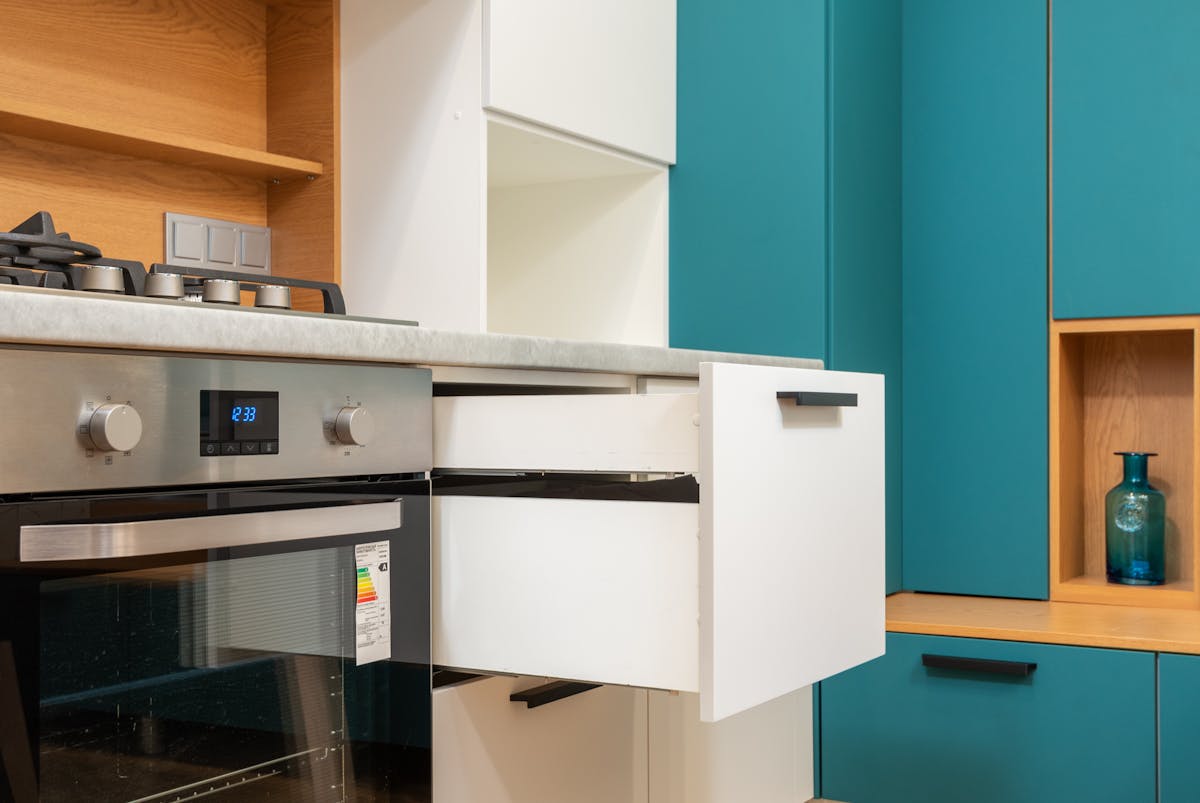
A House Built for a Different Kitchen
Drive through Magnolia Park, the tract streets off Chandler, or the older pockets of Toluca Lake and you’re looking at houses built for Lockheed and studio workers between about 1945 and 1958. Solid bones, original hardwood, and a kitchen that was designed around a completely different set of appliances than the ones sold today.
I get called to a lot of these houses, and a good chunk of the time the appliance isn’t actually broken — the house is fighting it. Before we swap a part, we’ve learned to ask a few questions specific to Burbank’s older housing stock. Here’s what we run into most.
The 60-Amp Panel Problem
A huge number of these original Burbank homes were wired with 60-amp fused panels — sometimes upgraded to 100-amp at some point, but plenty are still original or close to it. Sixty amps was plenty for a 1948 kitchen with an icebox and a hot plate. It is not plenty for a modern side-by-side refrigerator with an icemaker, a garbage disposal, a microwave, and a dishwasher all sharing a couple of circuits.
What this looks like on a service call: a customer reports their new refrigerator “keeps shutting off” or their dishwasher “won’t finish a cycle.” We test the appliance and it’s fine. Then we check the panel and find a breaker (or worse, a screw-in fuse someone replaced with a penny at some point — we still find these) tripping every time two appliances draw current at once.
This isn’t a repair we can fix with a part. It’s an electrical capacity problem, and the honest answer is a referral to a licensed electrician for a panel upgrade — typically $2,500-$4,500 for a full service upgrade to 200 amps, more if the main line from the street also needs replacing. We tell people this straight rather than replacing the appliance a second time and having the same breaker trip again in six months.
The Wall Oven That Doesn’t Fit Anything Sold Today
This is the one that surprises people. A lot of original Burbank homes still have their 1950s-60s built-in wall oven — often a Frigidaire “Flair” drop-down unit or an early GE built-in — set into a custom cabinet cutout. These units were never standardized the way modern 24", 27", and 30" wall ovens are. The cutout in the cabinetry might be 21.5 inches, or an odd depth, or missing the standard trim flange entirely.
When one of these finally dies (and after 60-70 years, most eventually do — though we’ve serviced a few that are older than the homeowner), a straight swap for a new wall oven usually doesn’t work. The new unit’s trim kit won’t cover the old cutout, or the opening is too narrow, or the electrical box behind it is in the wrong spot for a modern unit’s connection point.
Depending on the gap, the fix is either a custom trim panel (a cabinet shop job, usually $300-$600) or, in the worst cases, actual cabinetry rework. We always check cutout dimensions and take photos before quoting a wall oven replacement in one of these houses — it’s the single biggest reason installs go over budget when nobody checked first.
Undersized Gas Lines for Modern Ranges
If a customer in one of these older homes is upgrading to a higher-output range — a lot of people want the 18,000-22,000 BTU burners you see on newer Frigidaire, GE Café, or step-up ranges — the original 1/2-inch black iron gas line run to the kitchen in 1950 may not deliver enough gas pressure to feed it properly. Symptoms show up as a weak, lazy flame on high, or a burner that won’t hold a consistent flame at all, especially if another gas appliance (water heater, furnace) is drawing on the same line at the same time.
We see this most on houses that never had a gas line upsized after later remodels added a bigger range or a gas dryer. The fix is a plumber running a larger line (typically 3/4-inch) to the kitchen appliance branch — not something we do ourselves, but something we flag immediately instead of letting a customer assume their new range is defective.
The Three-Prong Dryer Outlet
Any Burbank home wired before 1996 was allowed to have a 3-prong dryer outlet that combines neutral and ground. Code changed in 1996 (NEC 250.140) to require a separate 4th ground wire on new dryer circuits, and most dryers sold today still ship with a 3-prong cord to stay backward-compatible — but plenty of newer smart dryers and a few electric models now ship 4-prong only, or the safety-conscious answer is to convert the outlet anyway.
If you’re replacing an old dryer in one of these original houses and the new one arrives with a 4-prong cord, don’t force it onto a 3-prong outlet. That’s an electrician job — usually a straightforward outlet swap if there’s a ground wire already in the wall (common in houses that had any electrical work done since the 60s), more involved if there isn’t one. We check this before we leave if we’re delivering a dryer repair on an older Burbank property, because it’s a five-minute look that saves a customer from a mismatched cord situation later.
Why We Bring This Up Before We Bring a Part
None of this is us trying to talk our way into more work. It’s the opposite — a lot of these are jobs we can’t do and shouldn’t try to. But an appliance repair call that’s actually an electrical or gas-line capacity problem needs to be diagnosed as one, not treated as a bad compressor or a defective control board. We’ve seen other companies replace the same dishwasher twice on a 60-amp panel before anyone checked the breaker box.
If you’re in one of Burbank’s original post-war neighborhoods and an appliance is acting strange in a way that doesn’t match the usual failure patterns — cycling off randomly, tripping breakers, a new oven that won’t fit the old cutout — call us at (818) 264-4269. We’ll tell you honestly whether it’s the appliance, the house, or both, and point you to the right person if it’s not a job we do.